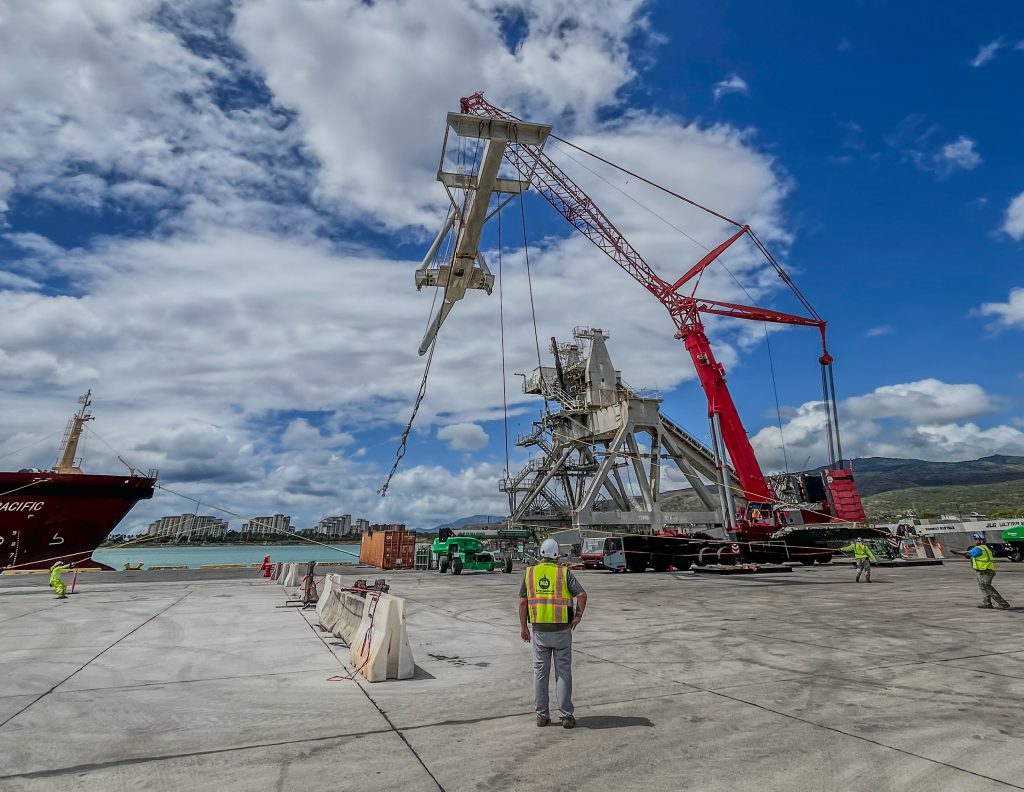
North American Dismantling Corporation (NADC) was awarded a project award for the disassembly of a continuous ship unloader at Kalaeloa Barber’s Point Harbor in Hawaii. Winning Category 2 ($1,000,001-$5,000,000) at the National Demolition Association’s 2026 Annual Convention & Expo in Phoenix.
The Continuous Ship Unloader (CSU) at Kalaeloa Barber’s Point Harbor project was located on O’ahu, Hawai’i. The CSU was a rail-mounted, hydraulic, counterbalancing, ship unloader that was equipped with a bucket elevator to remove coal from a ship’s hold.
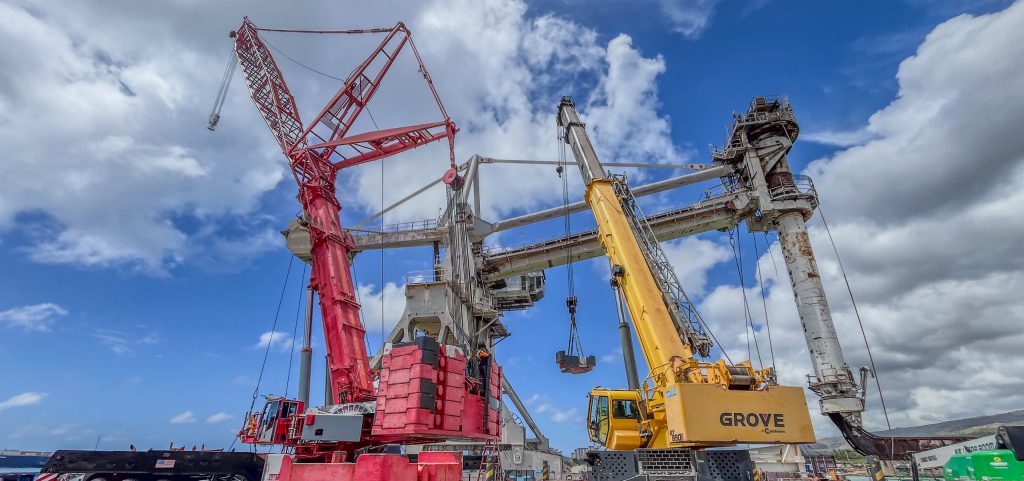
All fuels for the entire State of Hawai’i are transported through this harbor, which remained active during demolition. Multiple shipping vessels were in close proximity to the work area for the duration of the project. Located only 4 feet from Pacific waters, the CSU was an extremely unbalanced structure, and it is one of only two in the world engineered to this spec. After careful planning, engineering, and execution, North American Dismantling Corp. safely disassembled and picked down the CSU structure utilizing a crane with a 700-metric-ton lifting capacity.

The engineered demolition plan required NADC to systematically remove weight from each side of the main pivot point to keep the structure balanced. The tie-down dynamometers were used to monitor forces on each cable. Turnbuckles were used to redistribute forces and maintain the safe working loads of the plan.
The upper A-frame structure was controlled by one large hydraulic cylinder. The cylinder’s strength and reliability were relatively unknown. NADC fabricated and installed a block around the cylinder rod to prevent the cylinder from compressing. The team also installed two continuous lifting chains to prevent the cylinder from moving under tension.
The successful demolition of the CSU showcased NADC’s ability to overcome complex engineering, logistical, and environmental challenges. Despite the unique counterbalancing design and location within a harbor, the project was completed safely, two weeks ahead of schedule, under budget, and with 99% of eligible materials recycled. NADC utilized innovative methods, including 3D modeling, custom tie-down assemblies, and containment systems to protect the environment and ensure structural stability. By safely removing the 593-ton steel and concrete structure, NADC created 150 feet of additional pier space, enhancing the harbor’s capacity and supporting Hawai’i’s economic future.
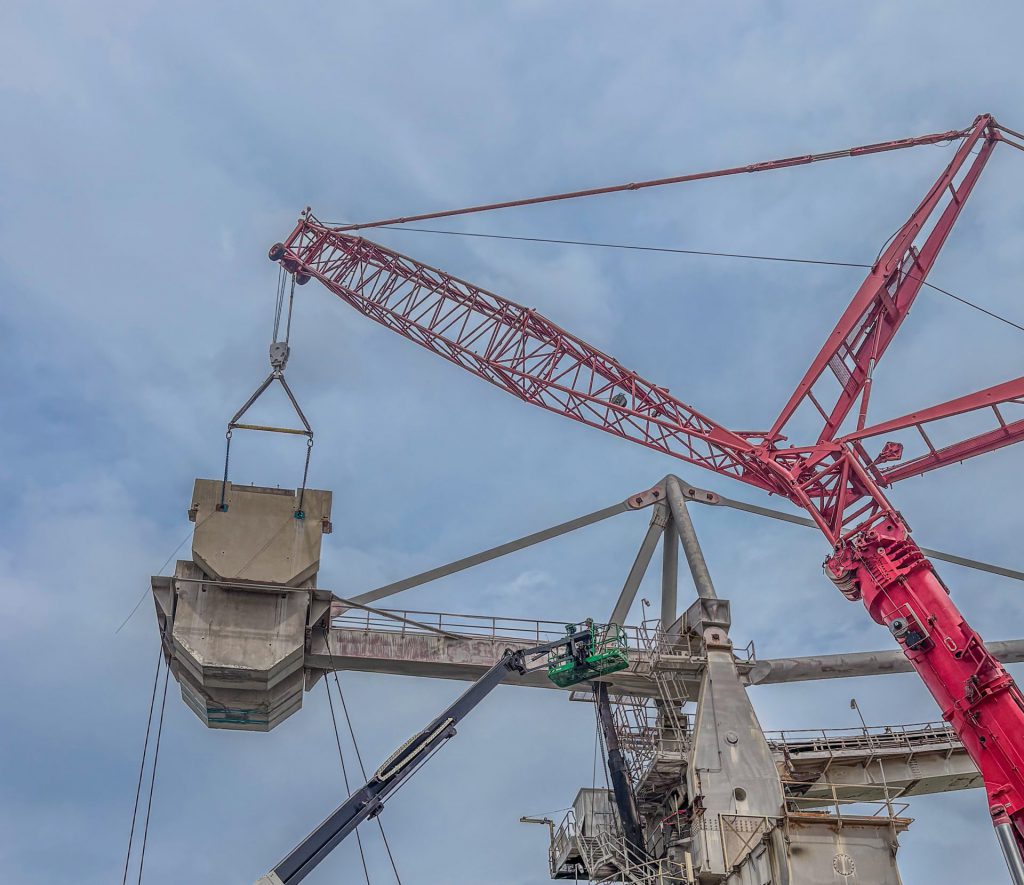
Challenge: The CSU had 6 concrete counterweights weighing 80,000 lbs. each and were 90 feet off the ground. The original rigging points were unusable.
NADC engineered and cored rigging points in each counterweight. Managing the slurry at this elevation and proximity to the water was a challenge. A containment system was designed and built to contain the slurry and direct it through a hose to the ground level.
Challenge: The CSU is a counterbalancing structure with a single pivot point.
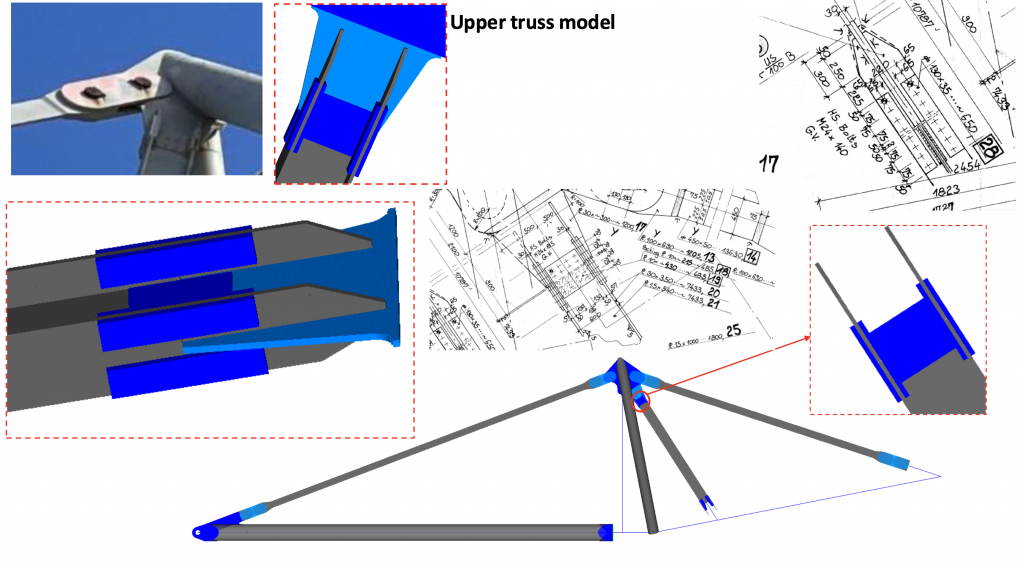
NADC utilized a third party to produce multiple plans, calculations, and 3D models of the structure to allow us to design and simulate scenarios. The team designed and utilized tie-down assemblies on each end to keep the structure from moving. The tie-down assemblies consisted of 2” wire cables, 35-ton turnbuckles, and four 17-Metric-Ton Dynamometers (load cells). The load cells allowed NADC to monitor movement and tension in our tie-down assemblies throughout the crane lifting and rigging operations. The tie-down assemblies were anchored to two 40-foot shipping containers on the pier. Both containers were reinforced with structural steel and filled with 200,000 lbs. of crushed concrete. Additional engineering was required to ensure the pier could hold this much weight without failing.
The engineered demolition plan required NADC to systematically remove weight from each side of the main pivot point to keep the structure balanced. The tie-down dynamometers were used to monitor forces on each cable. Turnbuckles were used to redistribute forces and maintain the safe working loads of the plan.
The upper A-frame structure was controlled by one large hydraulic cylinder. The cylinder’s strength and reliability were relatively unknown. NADC fabricated and installed a block around the cylinder rod to prevent the cylinder from compressing. The team also installed two continuous lifting chains to prevent the cylinder from moving under tension.