Winners of the 2026 Casbon Safety Award

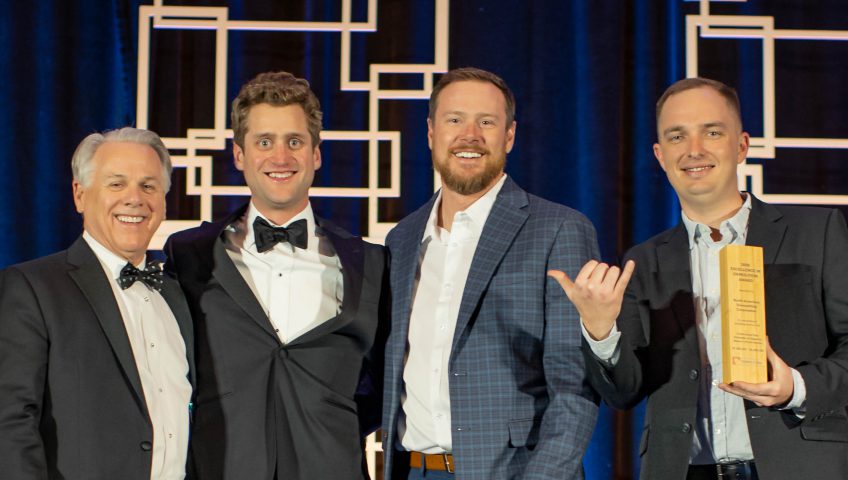
We are proud to announce our win of the 2026 Michael J. Casbon Safety Award! Team NADC accepted our award for the Category B (100,001 to 350,000 man-hours per year) at the National Demolition Association Annual Convention & Expo! This award, established to honor the legacy of the late Mike Casbon, recognizes companies that have demonstrated exceptional excellence in safety practices. At NADC, Safety is our #1 core value, and we are very grateful to the NDA for recognizing us. Everyone on our job sites works hard to keep safety first, and without their exceptional work, we could not have won this award.

Excellence in Demolition Award Winners!

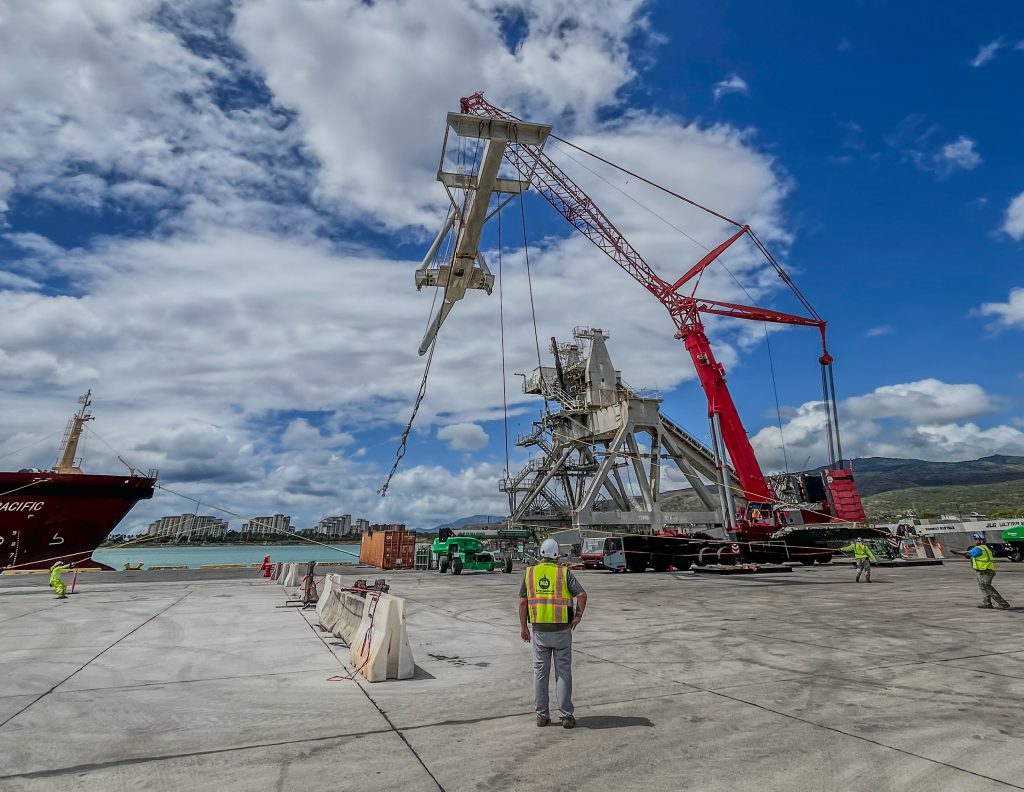
North American Dismantling Corporation (NADC) was awarded a project award for the disassembly of a continuous ship unloader at Kalaeloa Barber’s Point Harbor in Hawaii. Winning Category 2 ($1,000,001-$5,000,000) at the National Demolition Association’s 2026 Annual Convention & Expo in Phoenix.

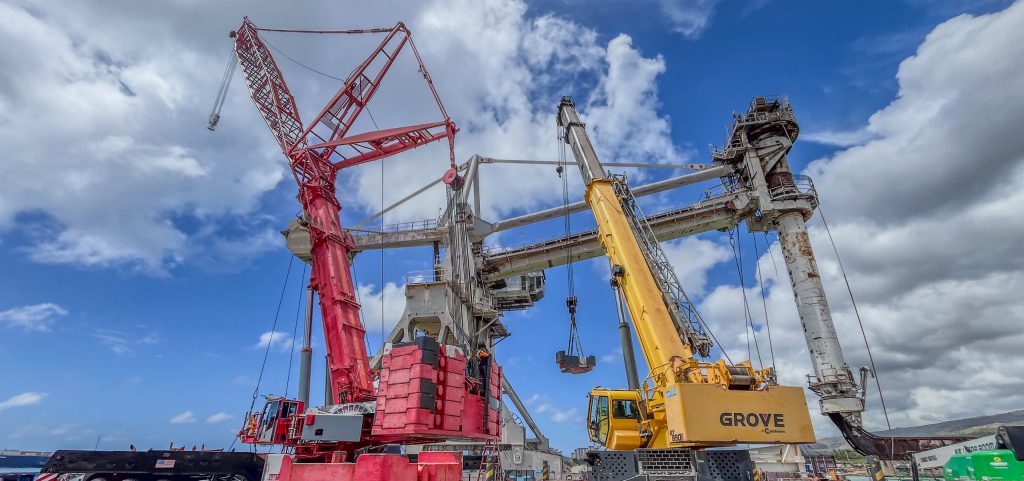
The Continuous Ship Unloader (CSU) at Kalaeloa Barber’s Point Harbor project was located on O’ahu, Hawai’i. The CSU was a rail-mounted, hydraulic, counterbalancing, ship unloader that was equipped with a bucket elevator to remove coal from a ship’s hold.

All fuels for the entire State of Hawai’i are transported through this harbor, which remained active during demolition. Multiple shipping vessels were in close proximity to the work area for the duration of the project. Located only 4 feet from Pacific waters, the CSU was an extremely unbalanced structure, and it is one of only two in the world engineered to this spec. After careful planning, engineering, and execution, North American Dismantling Corp. safely disassembled and picked down the CSU structure utilizing a crane with a 700-metric-ton lifting capacity.

The engineered demolition plan required NADC to systematically remove weight from each side of the main pivot point to keep the structure balanced. The tie-down dynamometers were used to monitor forces on each cable. Turnbuckles were used to redistribute forces and maintain the safe working loads of the plan.

The upper A-frame structure was controlled by one large hydraulic cylinder. The cylinder’s strength and reliability were relatively unknown. NADC fabricated and installed a block around the cylinder rod to prevent the cylinder from compressing. The team also installed two continuous lifting chains to prevent the cylinder from moving under tension.

The successful demolition of the CSU showcased NADC’s ability to overcome complex engineering, logistical, and environmental challenges. Despite the unique counterbalancing design and location within a harbor, the project was completed safely, two weeks ahead of schedule, under budget, and with 99% of eligible materials recycled. NADC utilized innovative methods, including 3D modeling, custom tie-down assemblies, and containment systems to protect the environment and ensure structural stability. By safely removing the 593-ton steel and concrete structure, NADC created 150 feet of additional pier space, enhancing the harbor’s capacity and supporting Hawai’i’s economic future.

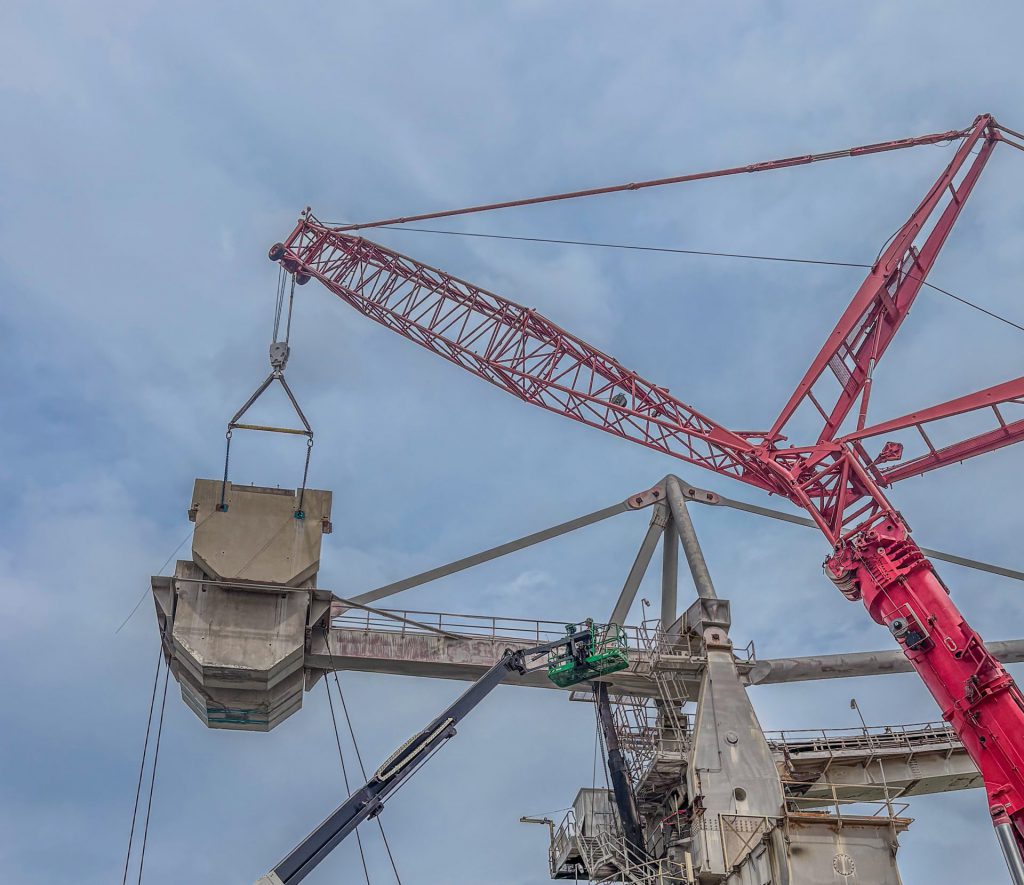
Challenge: The CSU had 6 concrete counterweights weighing 80,000 lbs. each and were 90 feet off the ground. The original rigging points were unusable.

NADC engineered and cored rigging points in each counterweight. Managing the slurry at this elevation and proximity to the water was a challenge. A containment system was designed and built to contain the slurry and direct it through a hose to the ground level.

Crane pick of the concrete counterweights
Methodical crane picking concrete counterweights on the CSU

Challenge: The CSU is a counterbalancing structure with a single pivot point.

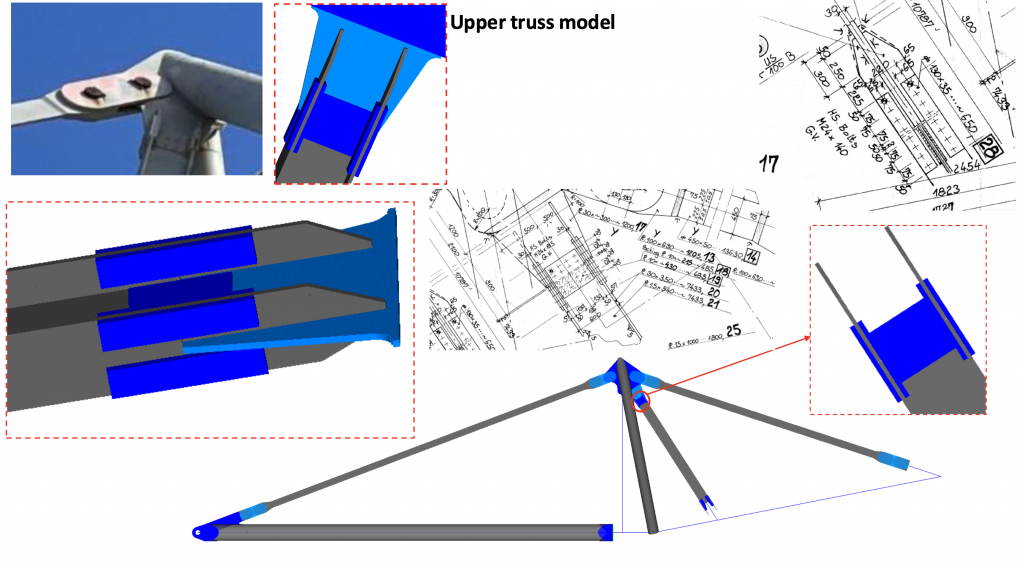
NADC utilized a third party to produce multiple plans, calculations, and 3D models of the structure to allow us to design and simulate scenarios. The team designed and utilized tie-down assemblies on each end to keep the structure from moving. The tie-down assemblies consisted of 2” wire cables, 35-ton turnbuckles, and four 17-Metric-Ton Dynamometers (load cells). The load cells allowed NADC to monitor movement and tension in our tie-down assemblies throughout the crane lifting and rigging operations. The tie-down assemblies were anchored to two 40-foot shipping containers on the pier. Both containers were reinforced with structural steel and filled with 200,000 lbs. of crushed concrete. Additional engineering was required to ensure the pier could hold this much weight without failing.

The engineered demolition plan required NADC to systematically remove weight from each side of the main pivot point to keep the structure balanced. The tie-down dynamometers were used to monitor forces on each cable. Turnbuckles were used to redistribute forces and maintain the safe working loads of the plan.

The upper A-frame structure was controlled by one large hydraulic cylinder. The cylinder’s strength and reliability were relatively unknown. NADC fabricated and installed a block around the cylinder rod to prevent the cylinder from compressing. The team also installed two continuous lifting chains to prevent the cylinder from moving under tension.

Engineered model used to calculate the dismantling
One of many: 3D engineered model used to calculate the dismantling
Largest crane pick: A-frame structure totaling 140,000 lbs.

NADC Ranked in Top 20 of Demo Firms

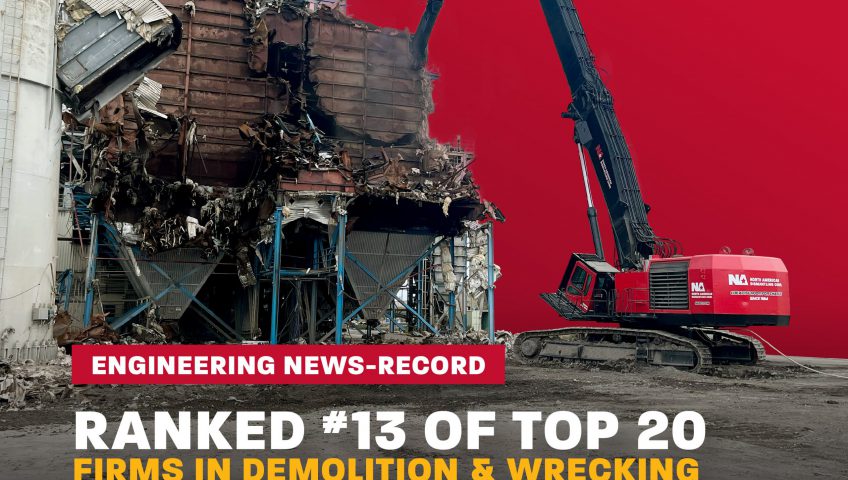
North American Dismantling Corp. was ranked #13 in the Top 20 of Demolition & Wrecking contractors in the country!

Each year Engineering News Record publishes a ranking of the Top 600 Specialty Contractors by sales volume. NADC has continued to rank among those top 20 of firms in the industry for several years. Also notable this year, NADC celebrated it’s 40th Anniversary and a record breaking year of successful projects across the country.

Since 1984, we have expanded our business nationwide working across many industries. After the company was incorporated, our first project was a gravel pit in Oxford, MI. It was a fantastic start for us, as it was the world’s largest gravel pit at the time. In the early 90s, we expanded our work into the local automotive industry, working with “The Big 3”, and the chemical industry by undertaking a total demolition project for Reichold Chemical in Ferndale, MI. During this time, we also performed our first implosion project at Wayne State University’s Mackenzie Hall in Detroit, MI. We take pride in our involvement with disaster relief efforts nationwide, including cleanup after tornadoes and Hurricane Katrina. Additionally, we deployed our first two high-reach excavators at the World Trade Center in 2001. In the early 2000s, we began working on 200-to-500-megawatt power plants, starting with a boiler demolition for East Kentucky Power. Later, we ventured into property redevelopment and a new industry by purchasing, demolishing, and reselling the property of a paper mill in New Hampshire. These are just a few notable highlights from our early years. In recent years we have demolished more than 1.4 Million tons of material from power plant projects. Currently, NADC’s major projects include the total demolition of two large power plants and multiple jobs in the automotive, commercial, and industrial markets. These are just a few of the many projects that have kept our team among the Top 20 in the industry.

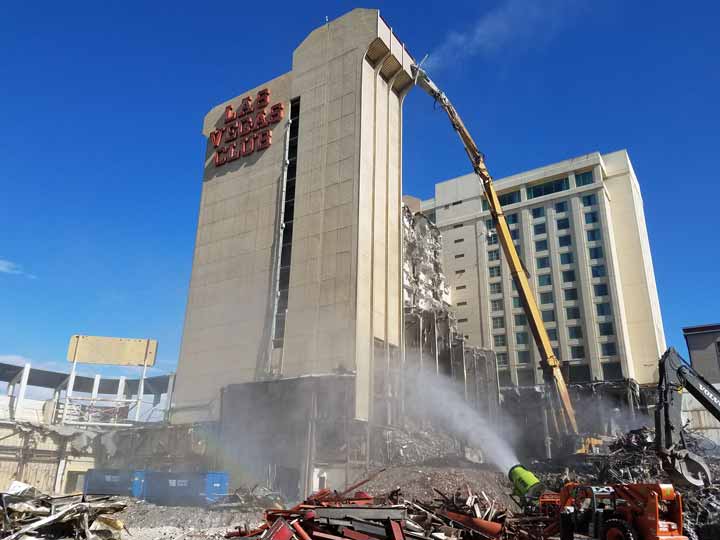
Detail and Determination Safely Bring Down a Dozen Buildings in Las Vegas Casino Complex

Deconstruction of more than half a million square feet of commercial and entertainment space on Freemont Street in Las Vegas was accomplished by North American Dismantling Corp. as a subcontractor to Tre Builders. Demoli­tion included various one- to three-story structures, a seven-story parking garage, and north and south office towers, which stood 15 and 14 stories, respectively, to make way for the first new casino resort to be constructed downtown in decades.

The abandoned interiors still housed a multitude of materials, from refrigera­tion and kitchen equipment to carpeting, drapers, and furnishings. The exterior materials ranged from brick to finished concrete to the Gunite screen. The south tower incorporated a metal and concrete facade at the roofline. Structural steel was used throughout. The north tower, with its steel frame and staggered truss system, was a particular challenge.

"We needed to build a workbench for the high-reach equipment to access the towers," says Jerry Decker, project manager with North American Disman­tling. As the structures came down, the materials were segregated and sized for use in constructing the 35-ft-high work­bench for accessing the north tower.

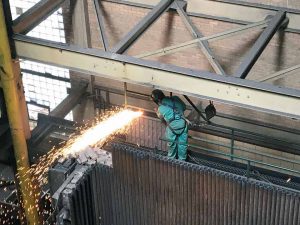
The high-reach equipment was used first to remove the roof, penthouse and four stories of floors between the column lines. Once exposed, a crane with a man basket carried workers to designated elevations for torch cutting and felling. This continued from east to west, bay by bay, until the stairwell at the west end was reached. The west end was then felled in four separate events.

Dust control was a major concern since the buildings were surrounded by crowded streets and casino venues. This led to a deliberate, phased demolition approach. "The Clark County Depart­ment of Air Quality visited the project every day," Decker says. "They were always complimentary of our efforts to control dust and did not issue a single warning or citation." The project required 28,163 man-hours.

Materials from the concrete parking struc­ture were used to construct a 35-ft-high workbench needed for the high-reach equipment to access the towers.

North American Dismantling Clears Denver’s Arapahoe Power Plant

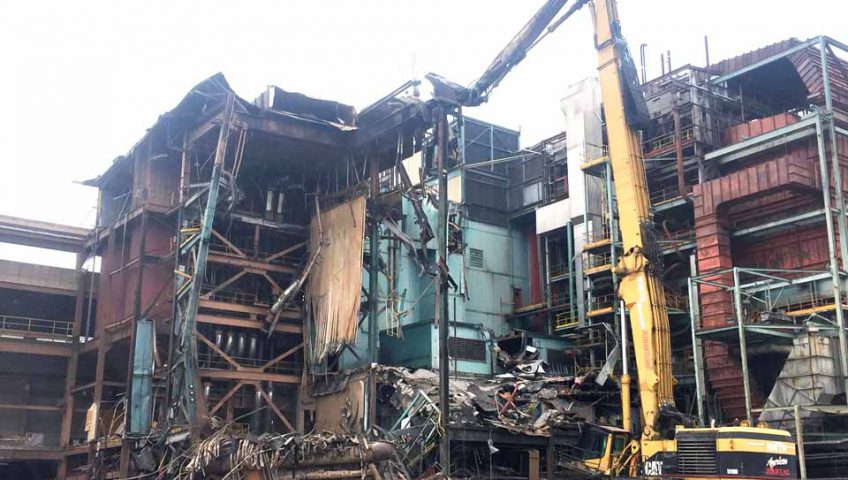
In May of 2015 North American Dismantling began the decommission and demolition of the Arapahoe power plant located in Denver. Xcel Energy with contracted North American Dismantling (NADC) to complete the total dismantlement of the entire Arapahoe power plant consisting of 65 structures, some reaching heights of 6 stories, and a total of 199,577 s.f. located on 50 acres.

In June of 2015 asbestos abatement of insulation and other material as well as lead paint removal was completed leading up environmental cleaning of chemicals, oils, and other contaminates in October of that year. Various storage vessels were emptied, cleaned, and disposed of during this environmental work.

In March of 2016 NADC began actual demolition work on the plant. Consisting of a total of four power-generating units with a peak height of 105 feet, ranging from 50-100 Megawatts equaling a massive 130,000 s.f. NADC demolished all the structures which included the power-generating units, various outbuildings including warehouses, shops, and storage buildings, foundation removal of structures, circulating water tunnels, all underground well & piping systems, Utility disconnects, coal conveyer demolition and employing conventional methods to demolish two of the plant’s concrete smoke stacks was part of this phase of the work.

The most challenging part of this project was the concrete removal. Between cooling tower basins, foundations, and circulating water tunnels, NADC removed, crushed and recycled approximately 24,000 yards of concrete. NADC successfully completed the over two-year project with zero recordable incidents, accidents, or injuries.

The demolition of the Xcel Arapahoe Power Plant took a total of 25 months to complete. with extensive abatement, environmental cleaning, and precise demolition work, North American Dismantling (NADC) was able to complete the project on time and on budget. A once expansive powerplant now sits as a 50-acre greenfield lot, restored to its natural beauty in Denver, Colorado.

Guts Beloit, WI Power Plant for College/Community Recreation Center

North American Dismantling Corp. Guts Beloit, WI Power Plant for College/Community Recreation Center

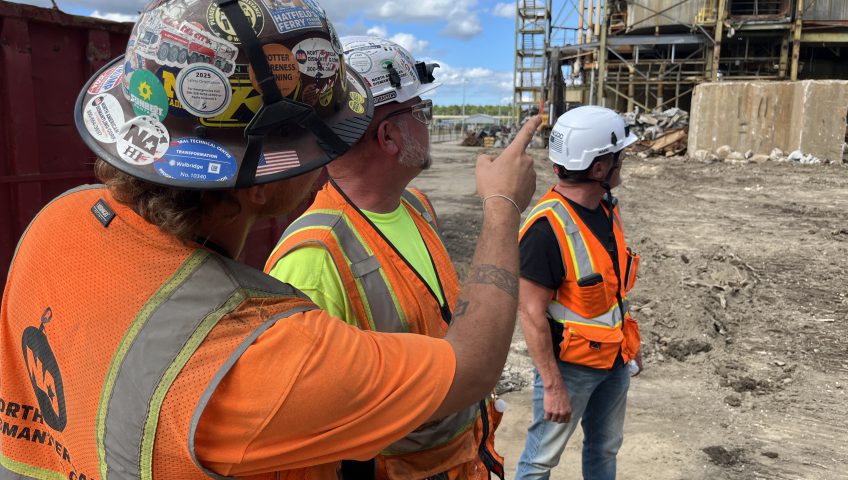
Michigan-based North American Dismantling Corp. recently stripped out the Blackhawk Power Station in Beloit, WI, so that it can become a new recreation center for Beloit College. The college is an integral part of the community that surrounds it, so the Black Hawk Power Station will be converted into a central gathering space where campus and community members can gather to eat, study, exercise, exchange ideas, and collaborate.

Starting in June of 2017, North American Dismantling Corp. (NADC) began site preparation for the removal of the plant’s Units 3 and 4 boilers and turbines, non-structural steel, coal handling, and precipitators structures, tanks and their associated piping, and the plant’s circulating water intake and discharge systems.

When developing the power plant into the community center, NADC had to protect all the architectural items that will be part of the new building. These included the plant’s roofing, siding, windows, and doors as well as the plant’s Unit 3 coal grinder, the overhead cranes that serviced both boilers, the interior brick veneer façade, and the turbine floor’s ceramic tile.
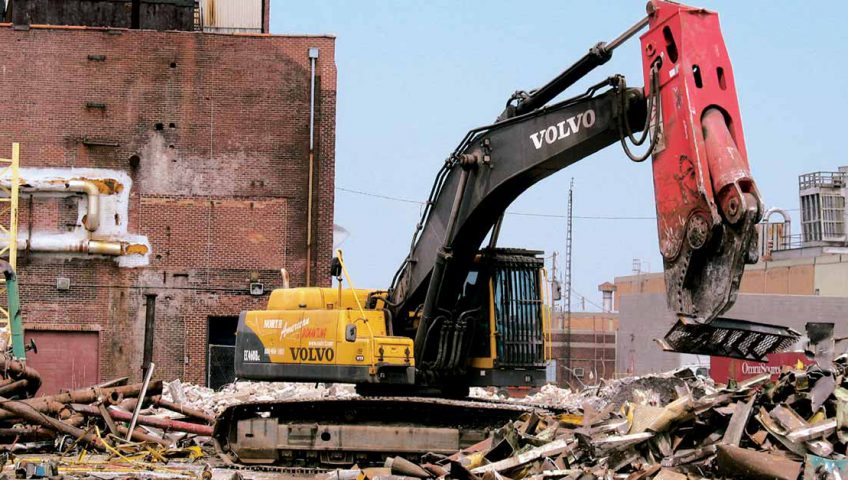
As with many power plant projects, NADC cleared much of the site in preparation for its new use, removed any process gases and oils remaining in the plant, backfilled any excavations, and decommissioned the plant’s discharge piping and intake tunnels.

NADC Brings Efficient Demolition to Various States

North American Dismantling Brings Efficient Demolition to Various States

Celebrating its 30th anniversary, North American Dismantling Corp., in Lapeer, Michigan, travels across the country to remove structures, accepting the challenging projects that require expertise.

“The company is on a tremendous upswing,” says Tim Seagraves, Marketing Director North American Dismantling. “We are going to grow, and it’s unlimited where we can go.”

The company has built a reputation as an efficient, safe, and economical demolition firm, using the newest equipment to bring down the most difficult selective and total demolition jobs. It currently has two powerhouse projects, one in Brilliant, Ohio, and another in Denver, Colorado. It also is demolishing an old plastics plant in Washington, West Virginia. “If the job is big enough, we will travel there,” says Marty Radelt, Purchasing Director of North American Dismantling.

Read Full Article >

Controlled Chaos: A Customers Success Story

Tear it down Strip the metal out. Pulverize the concrete. Shred-it. Shear it. Dice it up and get it out of here. Bring it all down and start over. The idea of a total demolition job may sound haphazard and uncontrolled – but large-scale dismantling firms like North American Dismantling Corp. have moved far beyond the days of just swinging away with a wrecking ball.

Read Full Article >

Saginaw Waste Water Treatment Plant Demolition

The Challenge: Safely Dismantle an Old GM Foundry

Lapeer-based demolition company remediates toxins, clears down to the concrete slab.

There is an online physics-based game called Demolition City. The game looks deceptively simple – almost Pac-Man-like – that one guesses it would be a snap for most anyone working at North American Dismantling Corporation (NADC), Lapeer, Mich. Whether the game or real life, the concept is the same: Know where the pivot points are in a structure that can bring it down most efficiently.

Specializing in heavy industrial demolition and strip out, North American Dismantling bids work throughout the United States and Canada. The company boasts expertise in engineering, environmental assessment, remediation, and specialty construction while maintaining its long tradition of being considered an industry leader in demolition.

A current demolition challenge for the company is a massive one-million-square-foot former GM Saginaw Malleable Iron foundry facility located in Saginaw, Mich.

Read Full Article >