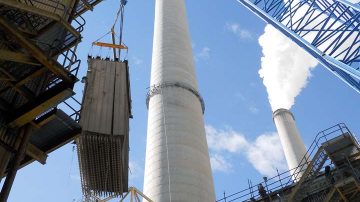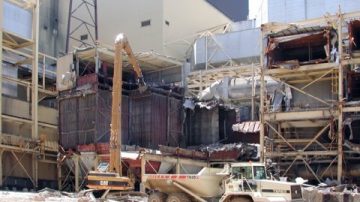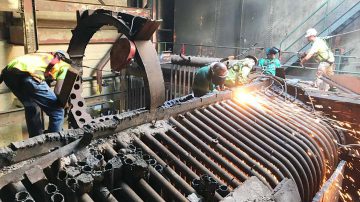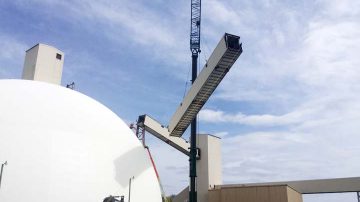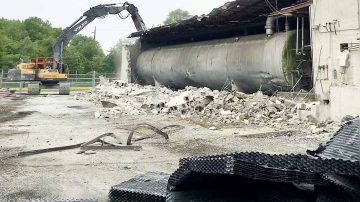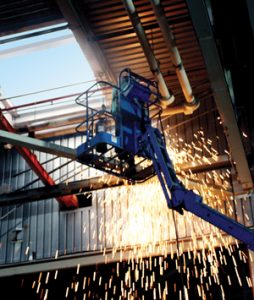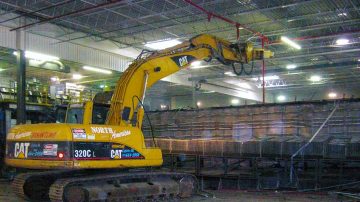
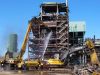
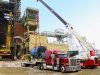

Located on an approximate 275-acre site, the operation opened in 1917 and had supplied metal sand-mold castings to the automotive market until it was permanently closed in June 2007. The complex includes a nine-story building and a single-story plant with 30-foot ceilings. There are basements, pits, and tunnels to contend with. Additional buildings, such as employee locker rooms, maintenance building, and a recycled water treatment facility are located adjacent to the main facility. Other storage buildings and utility sheds, such as: the oil storage shed, light non-aqueous phase liquids pump and treatment shed, butler buildings, and malleable substation are also located on the site. The $15 million project has been commissioned by Motors Liquidation Company (formerly General Motors), Detroit. NADC began working at the facility in November 2009 and expects to be finished by November 2010. The company is responsible for demolition and removal of everything down to the concrete building pad. NADC currently has about 40 workers on the site and anticipates nearly doubling the project workforce.
The environmental issues are extensive. Prior to 1978 Polychlorinated biphenyls (PCBs) were used in the manufacturing process. During that time, PCBs seemed like the good way to go. Consider that the commercial utility of PCBs was based largely on their chemical stability, including low flammability and desirable physical properties, including electrical insulating properties and as a “safer” cooling and insulation fluid. Being aware the possibility of contamination that would influence the demolition and disposal procedures, General Motors had a Facility Environmental Assessment prepared in 2007. This FEA indicated extensive PCB contamination throughout the plant—including dust, sludge, water and PCBs trapped between layers of paint on the building structures. Added to the PCB contamination were heavy metals, universal waste and ACM, which all needed to be addressed. Think about it… the years of commercial PCB mixtures used, within a lead-painted structure filled with asbestos-clad systems made for a toxic nightmare. It was a nightmare that NADC, with the help of EQIS, needed to tackle, all in accordance with EPA requirements. Storm sewers have been sealed off. All water used in cleaning will be captured. The dust and debris will be vacuumed up. “We wrote a comprehensive self-implementing testing plan
that was approved by the EPA, before we even started,” Clark
says. “We’re quite proud of our plan for this site.
It was developed and will perform extensive pre-cleaning and post-cleaning
sampling to delineate the extent of the PCB contamination.. Everything
will be cleaned, tested (if applicable), dismantled and hauled off-site
for recycling or disposal in a TSCA landfill.” NADC anticipates
that 95 percent of the steel and other materials will be cleaned,
tested, and recycled.
Prime Contractor: Reprinted with permission. Contact us for more detailed information on your project. |
|
||||||||||||||||||||||||||
|
Demolition
Contractors | Total
Demolition | Selective
Demolition | Industrial
Strip-Out | Controlled
Demolition |
![]() |
|
|||||||||||||||||||||||||
©
2006—2011 North American Dismantling Corp. | Trademarks shown are
the property of their respective owners.
Web Site Design & Hosting by
![]()